 Elizabeth
One of the most beautiful parts of living in Japan has been learning Ikebana, the traditional Japanese art of flower arranging. I’ve been taking classes since arriving here, and it’s become one of the most peaceful and rewarding parts of my week. It’s not just about arranging flowers—it’s a practice in intention, balance, and creativity that has truly changed how I see the world around me.
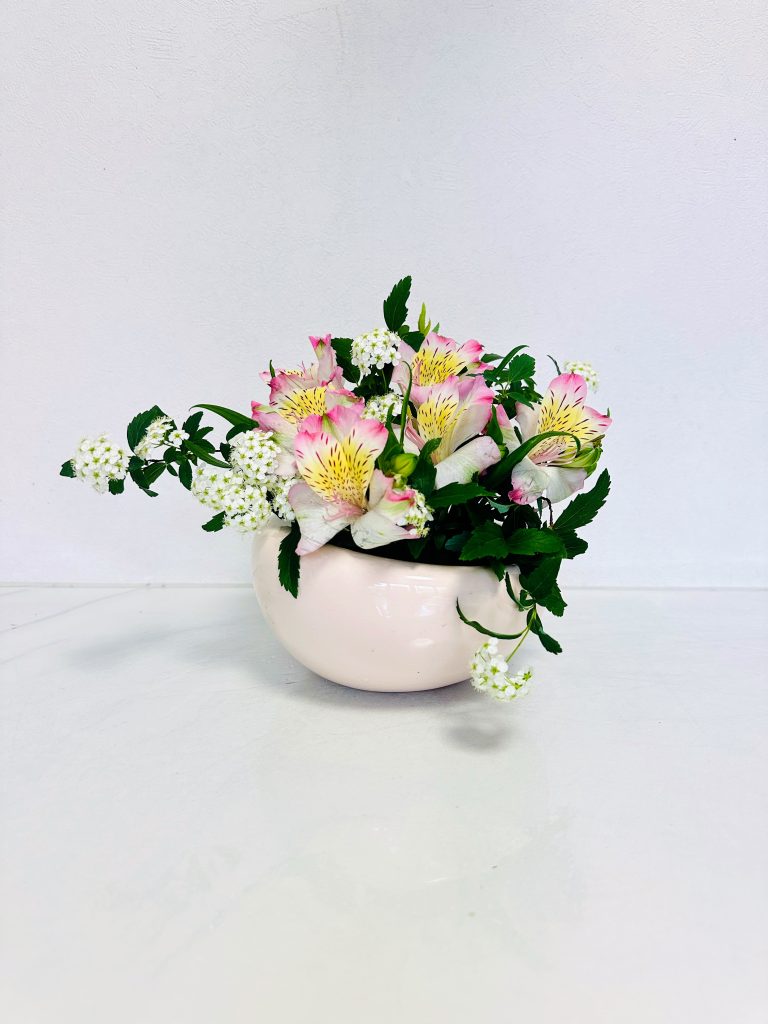
What Is Ikebana?


Ikebana, often translated as “living flowers,” is so much more than putting stems in a vase. It’s an art form with centuries of tradition behind it—focused on harmony, simplicity, line, and space. Rather than filling a vase with flowers, you consider the flow, the balance, and the negative space. It’s quiet work, almost meditative, and incredibly satisfying.


There are several schools of Ikebana, each with its own style and philosophy. I study with the Sogetsu School, which is known for its modern and expressive approach. Sogetsu allows a lot of freedom once you learn the basics, making it ideal for students like me who enjoy both structure and creativity.
Learning with Sensei Sue
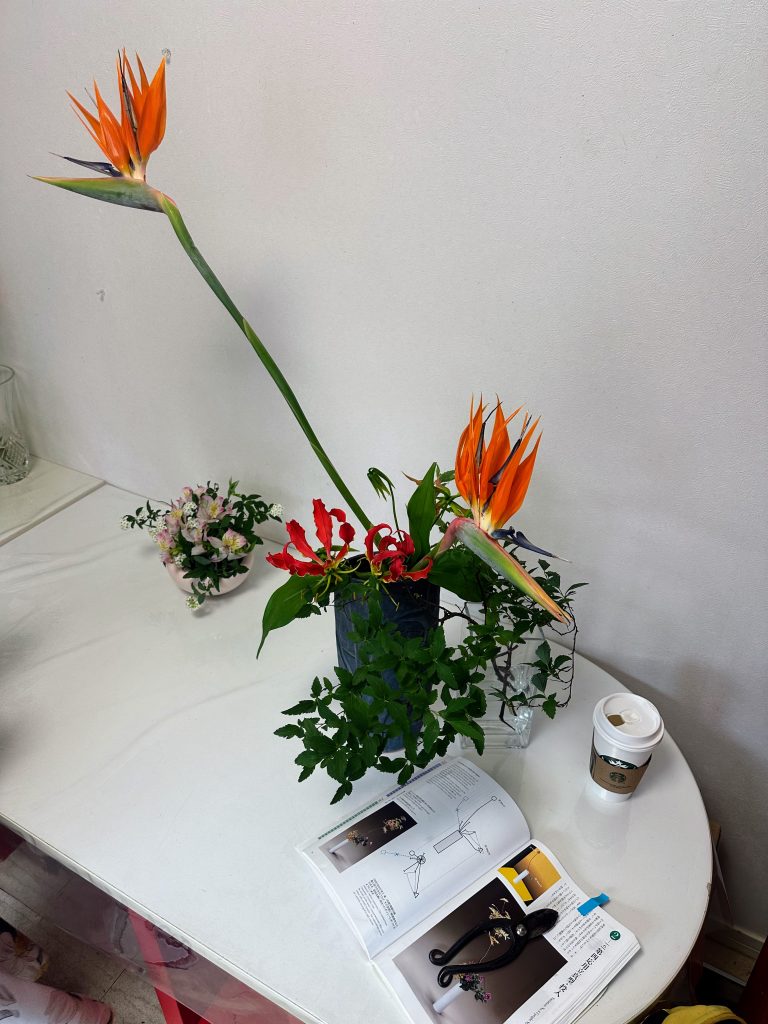
My teacher, Sensei Sue, is amazing. I head out to her studio in Den-en-Chofu once a week. The town is as cute as a button. I usually grab a coffee at the station before walking the two blocks to her studio. (Learn more about her studio here.) Not only do we work on traditional arrangements and the fundamentals, but she also encourages me to try modern, freestyle creations that feel more sculptural and expressive. We talk about color, shape, movement, and the flowers themselves. Her guidance has helped me earn my Level One Sogetsu certification, and I’m currently working toward Level Two.


Ikebana has made me slow down and pay attention to how a stem curves, how a flower leans, and how much more beautiful an arrangement can be when it feels like it belongs in the space around it. It’s given me a new appreciation for each flower and how to highlight its unique character.
Ikebana in Japanese Culture
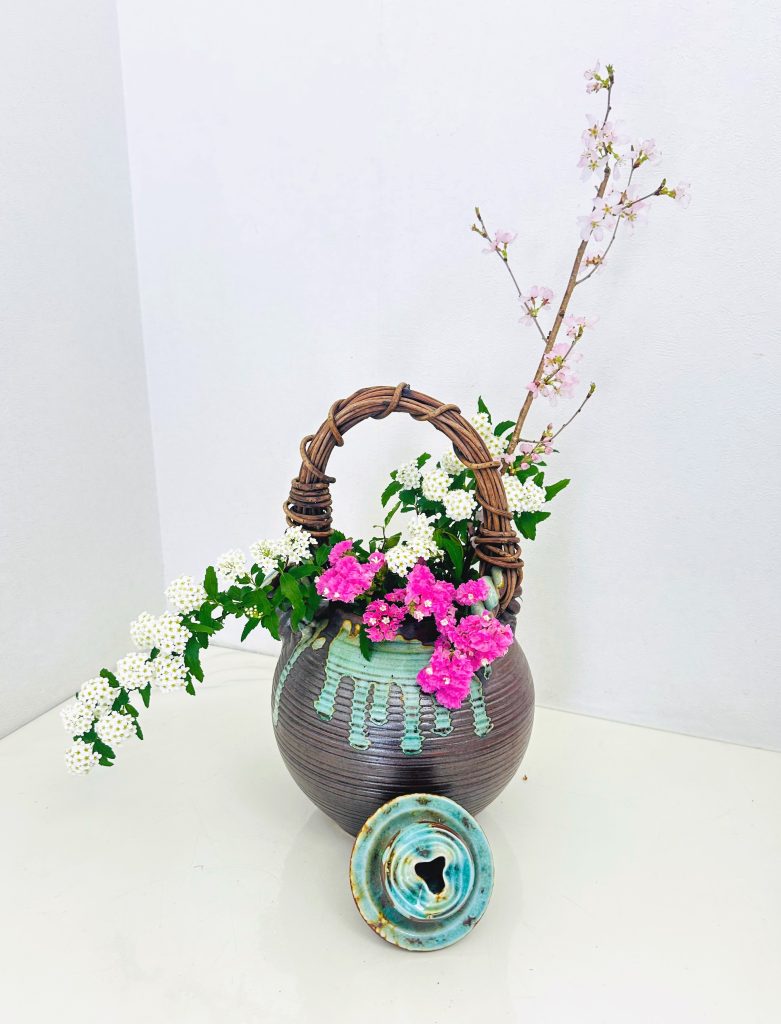
Ikebana is deeply tied to Japanese aesthetics and culture. It’s not unusual to see a seasonal arrangement in a hotel lobby, the corner of a tea room, or even in department stores. These aren’t random displays—they’re carefully designed to reflect the mood of the space and the time of year. Once you’ve taken a class, you start to recognize the thoughtfulness behind every stem and branch.
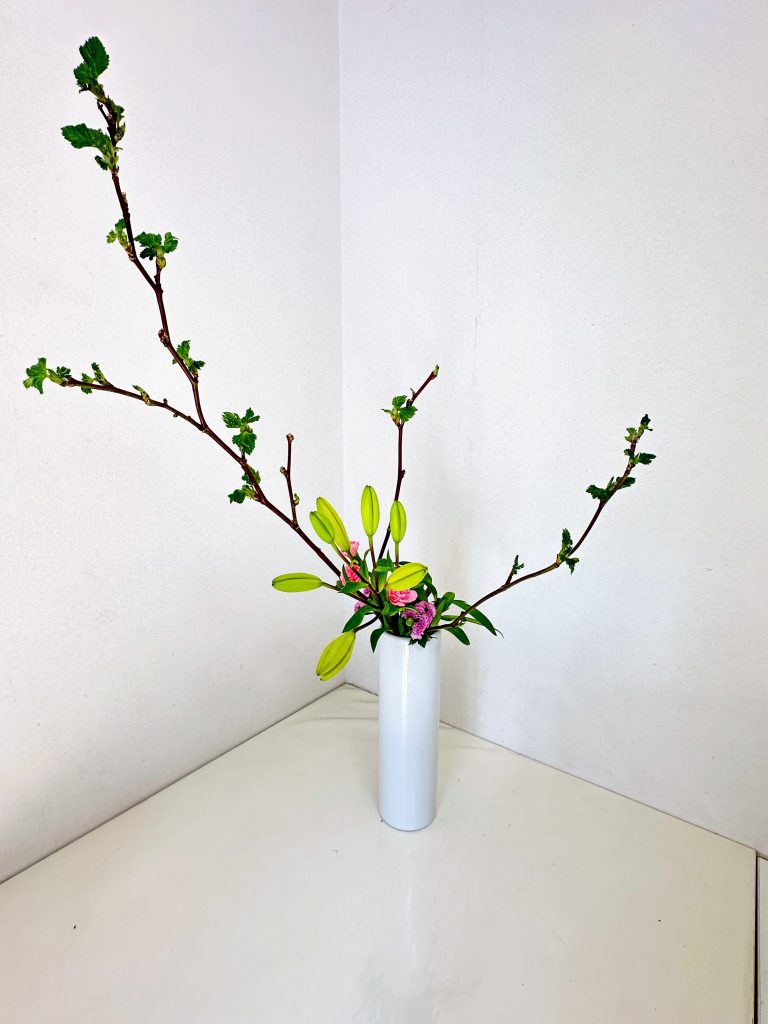
Want to Try It? You Absolutely Should
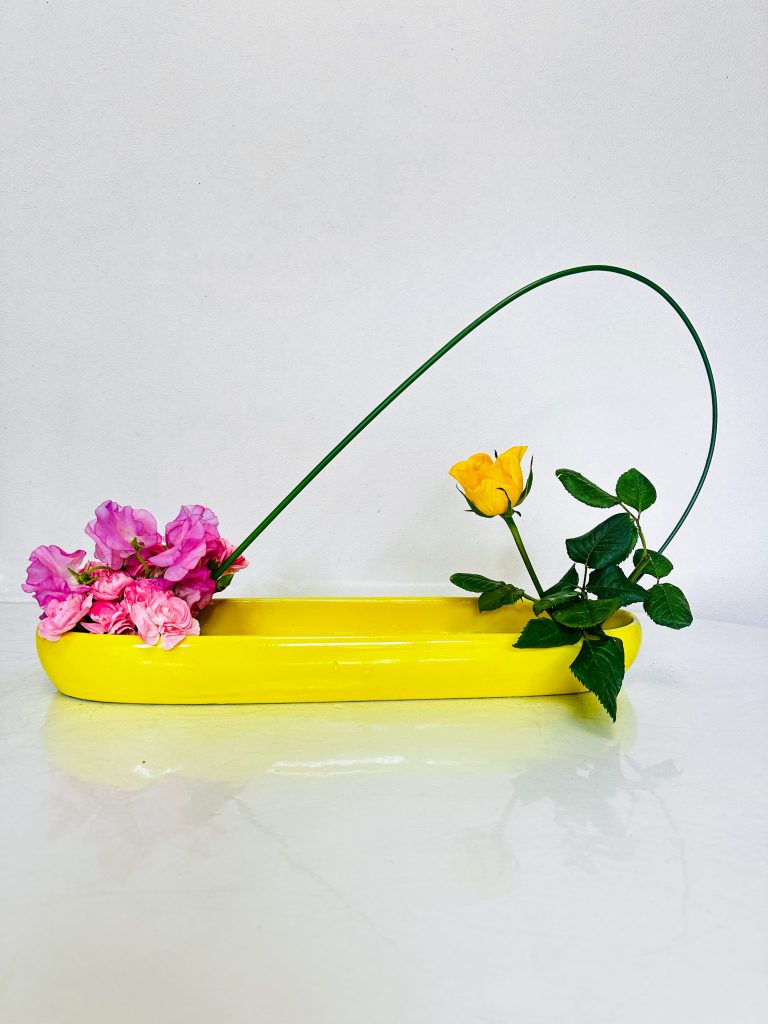
If you’re visiting Japan, Ikebana classes are offered all over the country—including one-time experiences for travelers. Many classes are held in English and are perfect for solo adventurers or groups. You can even arrange a custom class with my teacher, Sensei Sue, who teaches in English. She often organizes beautiful outings and seasonal experiences for her students, and class at her studio always includes a little homemade treat. Ikebana has turned out to be a great way to meet people and experience a more local side of Tokyo.
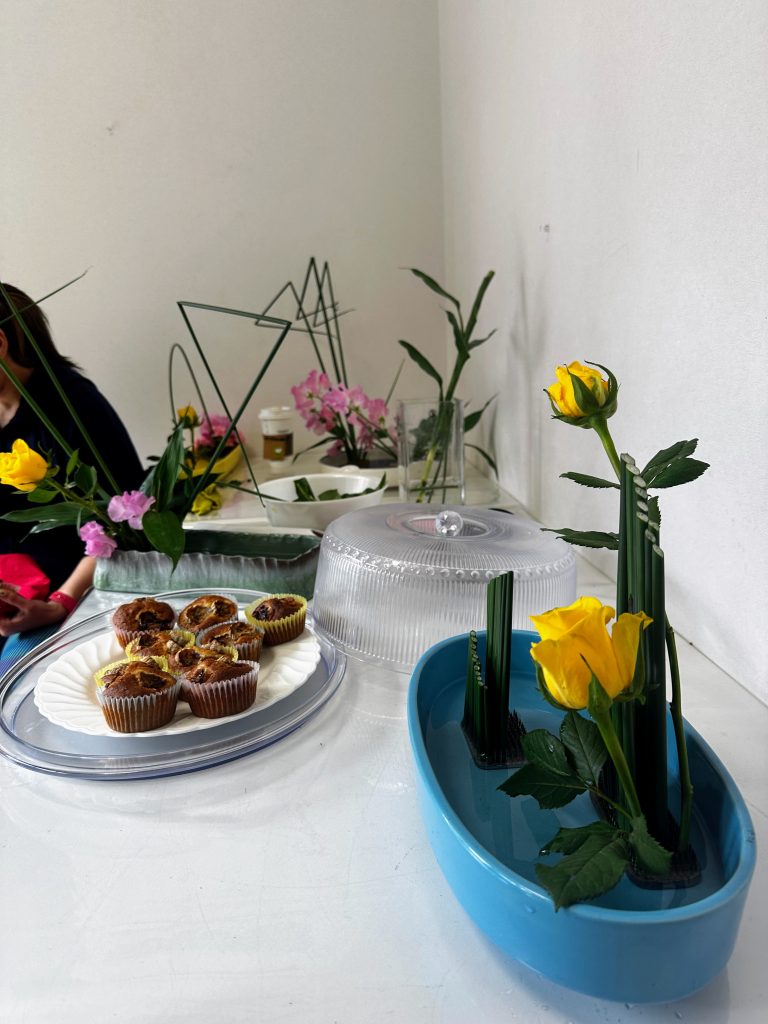
If you’re living in Japan, I highly recommend trying an Ikebana class and seeing if it is for you. It’s creative, calming, and gives you a unique connection to Japanese culture. (You can just follow her on Instagram if you want your feed full of stunning flower displays.)
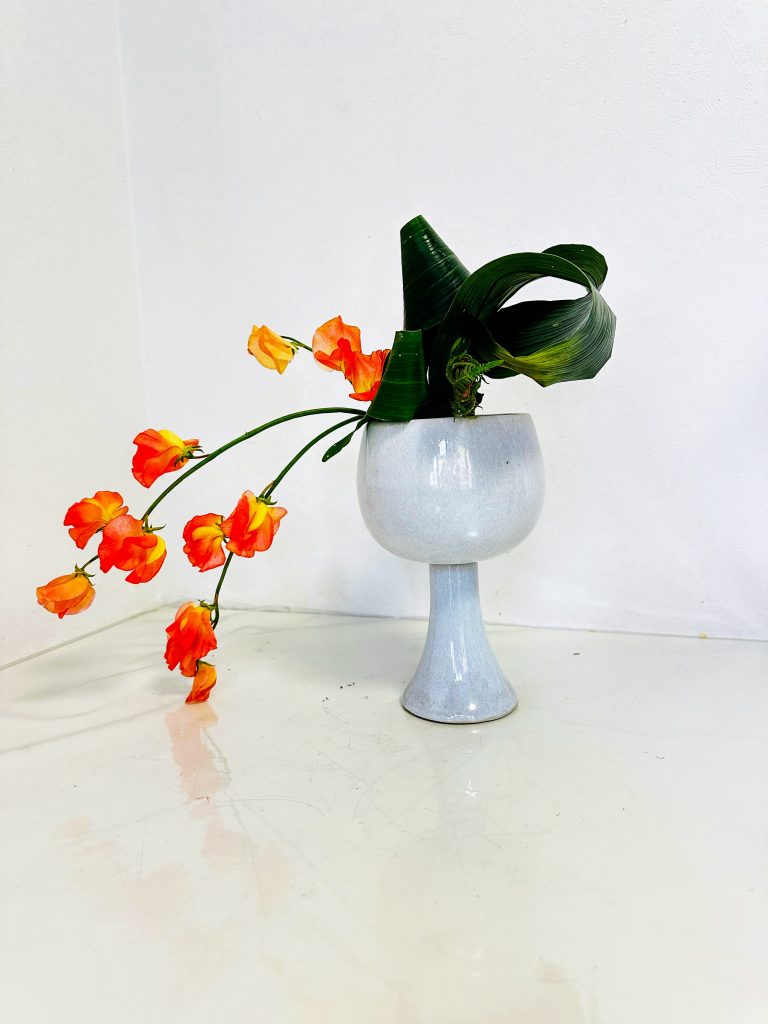
Even if you don’t take a class, start looking for Ikebana around you. Once you know what goes into each arrangement, you’ll spot them in hotels, restaurants, temples, and galleries. The way the lines pull you in, how the balance shifts from side to side, how the space breathes. You may even get lucky enough to catch an Ikebana exhibition.
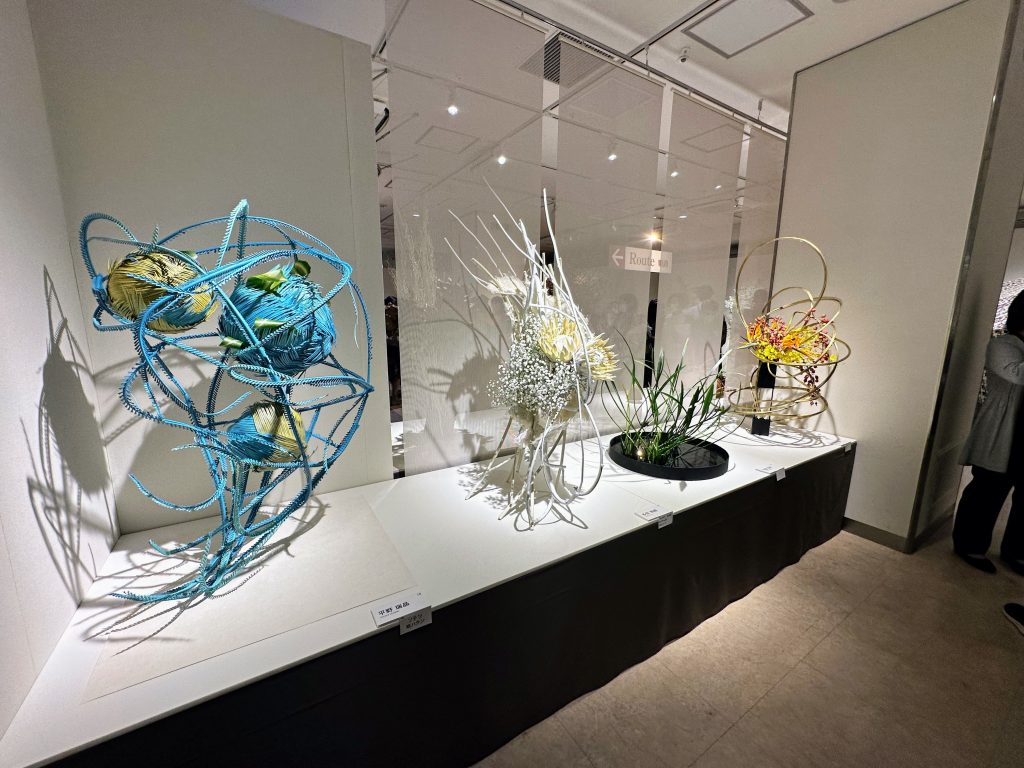
Ikebana has become one of those fun, unexpectedly delightful parts of my life in Japan. My house is full of flowers, I’ve learned a skill that feels quintessentially Japanese, and I get to make something beautiful every week. Whether you’re passing through or settling in, I truly recommend giving it a try.


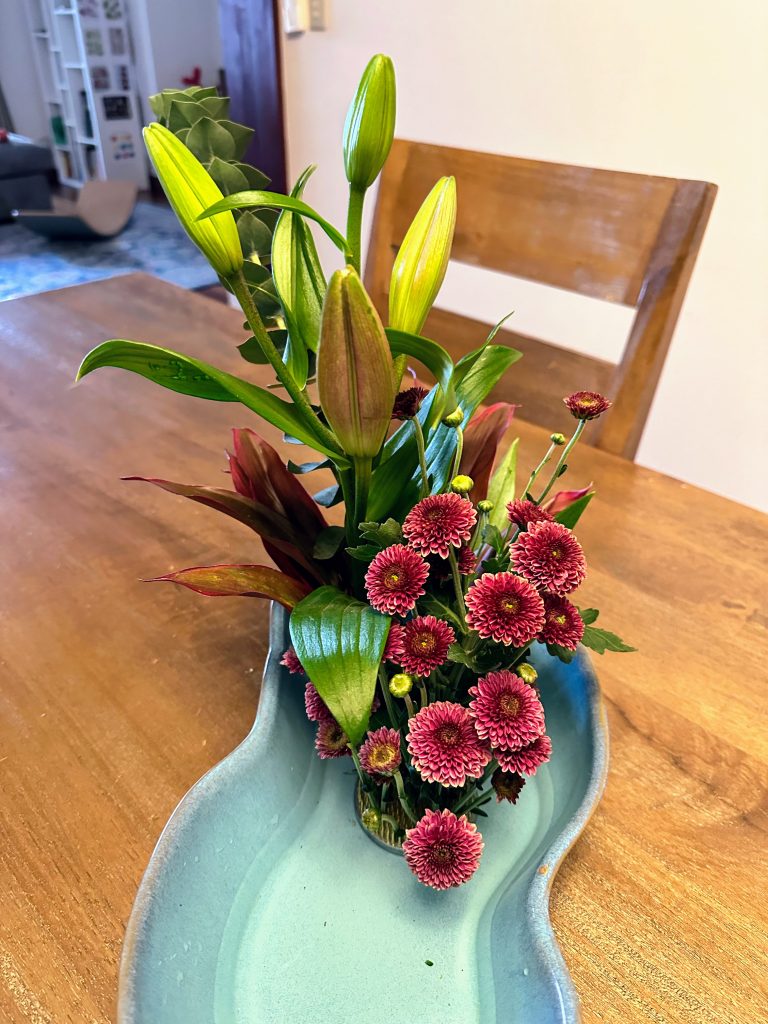
(Also, let’s be honest—I may have written this whole post just to show off some of my favorite Ikebana pieces. Can you blame me?)
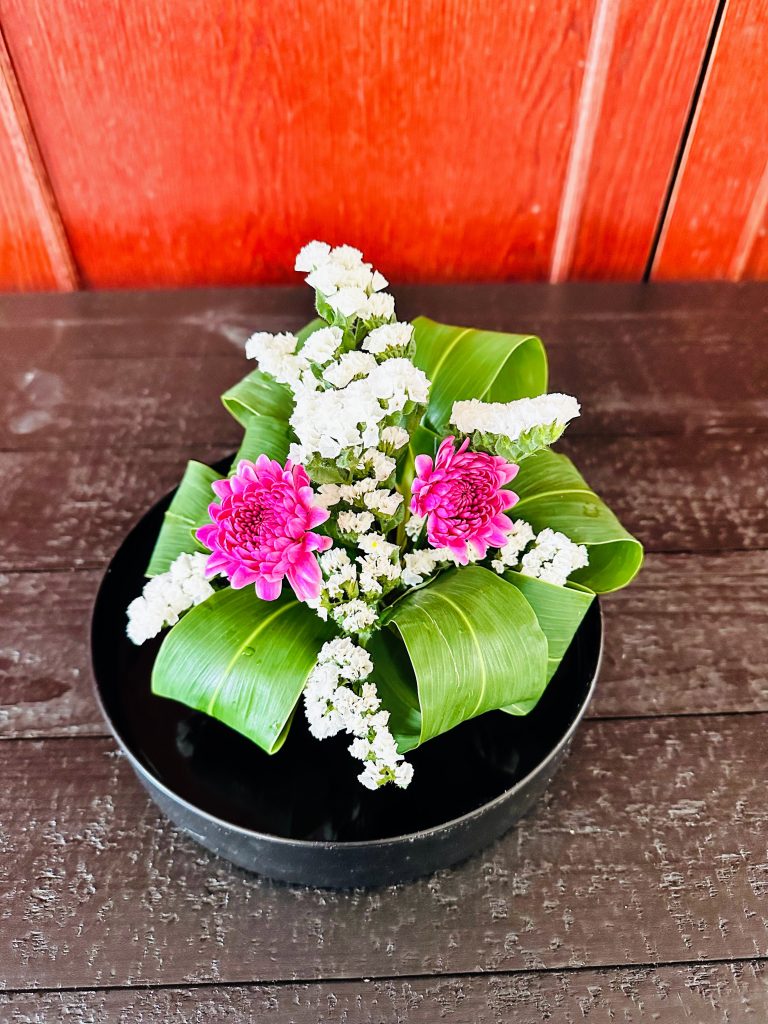
Would you try it?
Ikebana Supplies to Get You Started
If you’re curious to try Ikebana at home, here are some tools I recommend (and actually use!) that are available on Amazon:
- Kenzan (flower frog) – The spiky base that holds the stems in place.
- Ikebana scissors – Specifically shaped to cleanly cut flower and branch stems. (Weirdly, these are one of the things I love to find at shrine sales.)
- Shallow container – You don’t need a vase; a low, wide dish. There are so many amazing ones to choose from, you can also just use something you already have around the house. In Japan, I often find these at Book-Off Super Bazaar.
- This container also looks amazing.
- Flower bag – I’ve only seen these in Japan, but they are so great for carrying your flowers home from the store or class.
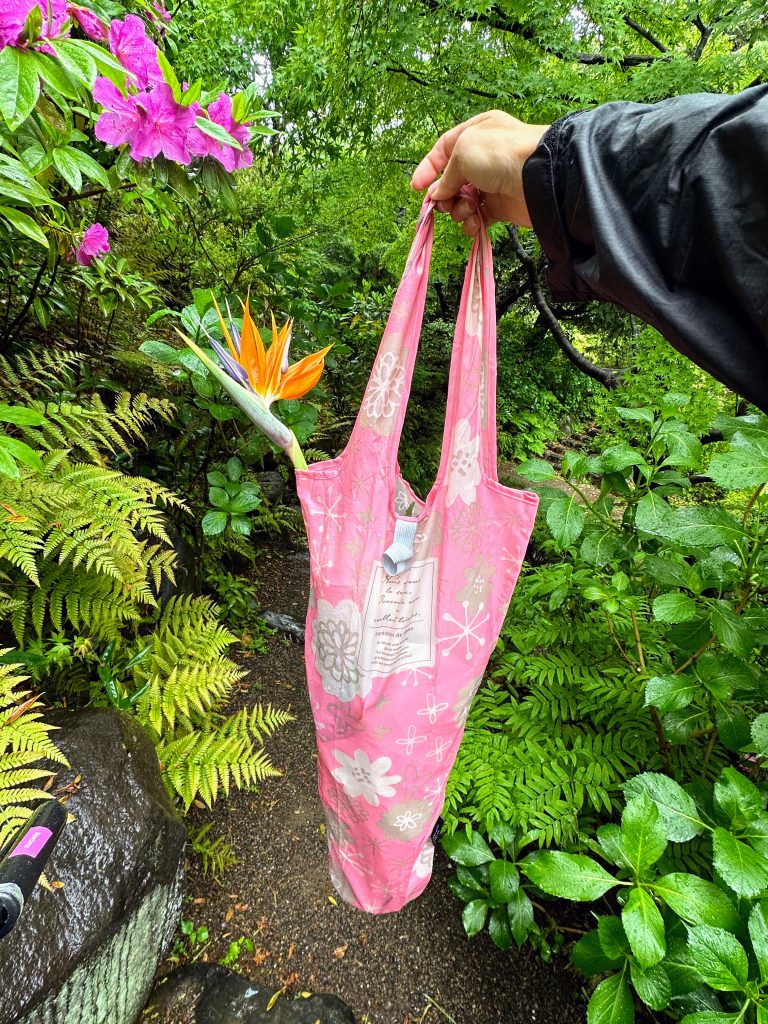
These basics will let you start practicing arrangements at home, and once you do, you’ll never look at flowers the same way again.
If you want to give it a try at home, there are some tutorials on YouTube! There are also plenty of books filled with instructions and inspiration. Our library has quite a few.
This post contains affiliate links, which means I may earn a small commission if you make a purchase at no extra cost to you. Thank you for supporting Dutch, Dutch, Goose!


