 Elizabeth
Our Family’s “Popsicle Stick” System for Rebuilding After Conflict
If you’ve listened to Care and Feeding, Slate’s parenting advice podcast, you’ve probably heard me mention our family’s “relationship repair” system a few times over the years.
I’ve been co-hosting the show for almost six years now, and this comes up often, during conversations about sibling conflict, meltdowns, and how to reconnect once the dust settles.
But I’ve never actually written it out before.
The Book I Don’t Recommend (But Still Learned From)
Years ago, a psychologist suggested I read The Defiant Child by Douglas Riley.
If you’ve ever looked it up, you’ll know why I hesitate to mention it on the podcast.
It’s very 1990s in tone, strictly behaviorist, focused on control and compliance, and alarmingly comfortable with punitive ideas (including the notion that some kids might need to go live in a “home” if parents couldn’t “manage” them). That approach doesn’t align with how I parent or with what we now understand about neurodivergent kids, trauma, and emotional regulation.
But buried under all that was one structural idea that I couldn’t shake: kids need a clear, consistent way to repair after a rupture.
Not a punishment, not a lecture, just a roadmap for rebuilding connection.
So I kept the structure and changed the spirit.
How Our Popsicle Stick System Works
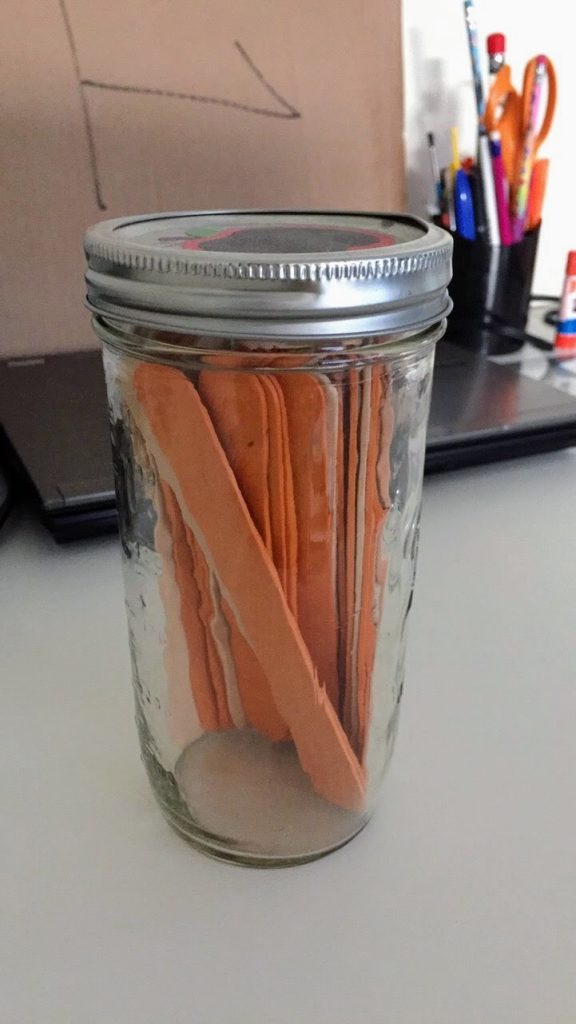
We have a jar filled with popsicle sticks, each labeled with a small task that helps repair relationships or support the family.
When someone’s behavior causes harm (For example, yelling, hitting, breaking something) the goal is not to punish.
It’s to repair.
We decide together how many sticks to draw based on the situation. (Our little chart breaks things into minor, medium, or major ruptures.)
Then the child draws the required number of sticks, which are color-coded with washi tape:
- Relationship Rebuilders – Write a note or draw a picture for someone, do a sibling’s chore, offer a hug or snack.
- Reflection Tasks – Journal about what happened, do a yoga or breathing video, take a mindful walk, make a calm-down playlist.
- Family Helpers – Tidy a shared space, vacuum, wipe baseboards, help prepare dinner.
When we first started, we used poker chips as incentives. If you got through a day or week without needing to draw sticks, you earned chips toward privileges or family treats.
Now it’s less about the chips and more about the rhythm of reflection and repair.
Because we homeschool, we can pause to do these tasks right away. But even in a busier schedule, the system works because it’s simple and visual: kids know exactly what to expect, and everyone understands that the goal is reconnection.
I think it’s so important that you alter this system to fit your family’s needs.
Why It Works
For neurodivergent kids especially, “time-delayed consequences” don’t make sense.
Once they’re calm, the explosion feels like old news.
This system gives them something tangible and positive to do afterward, an action that repairs trust without reigniting shame.
It also helps us as parents. Having a plan means I’m not scrambling for a consequence in the heat of the moment.
And the truth? It works better than punishment ever did.
It closes the loop in a way that feels fair and healing.
Full disclosure, sometimes we wander away from this system. There are just moments where it doesn’t work. It’s not a fix-all, but it has been a great tool in our arsenal over the years.
Build Your Own Repair Sticks
You can adapt this for your own family.
Grab a pack of Popsicle sticks and some washi tape (optional.)
Pick a few colors, and brainstorm activities together. It’s important to let your kids help create the list so they feel ownership.
Here are some ideas to start:
Relationship Rebuilders
- Write a kind note or card
- Offer to do a sibling’s chore
- Plan a small surprise for a family member
- Play a favorite game together
Reflection Tasks
- Draw what it felt like when you were mad
- Do a guided breathing video
- Journal one thing you’d do differently next time
- Stretch, do yoga, or take a quiet walk
- Write an apology note
Family Helpers
- Wipe baseboards
- Vacuum or tidy the living room
- Feed the pet
- Clean out the car
- Fold Laundry
The visual piece helped us a lot. Our chart might say “hitting = 2 relationship, 1 reflection,”
And once the sticks are complete, the incident is considered repaired. Everyone moves forward.
A Quick Note on Credit
If you’re curious about the original source, yes, this idea was adapted from The Defiant Child by Douglas Riley.
I want to be clear: I don’t recommend the book.
Its behaviorist, punitive tone doesn’t match modern understanding of child development or my own parenting philosophy.
But the tiny spark of structure it offered evolved into something connection-based that truly serves our family—and that’s worth sharing.